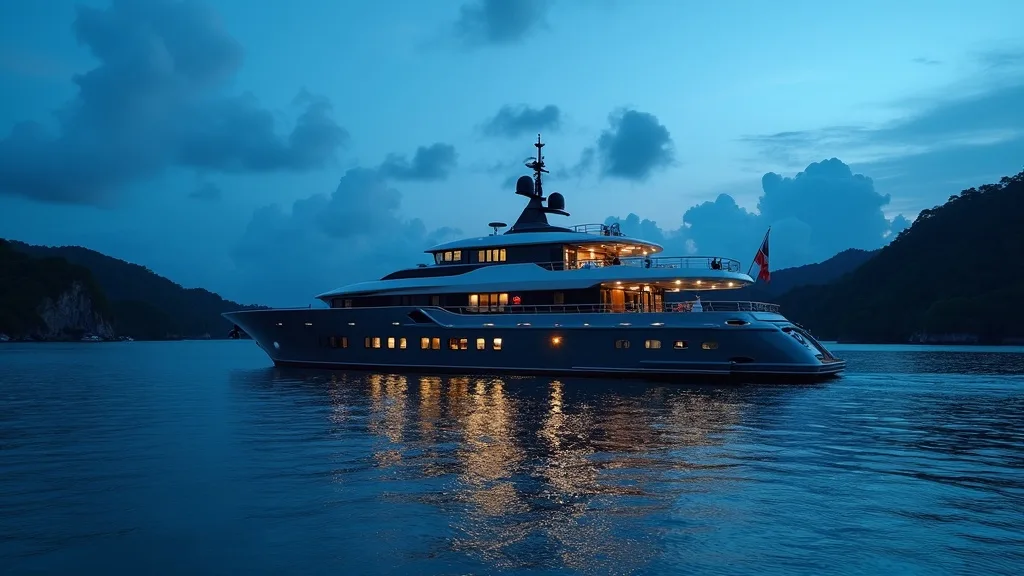
Raja Ampat works for families when the route is built around sheltered snorkelling and short crossings — the Dampier Strait and the Fam islands rather than an overnight run to Misool — and when at least one adult is happy to stay topside. Six or seven nights is the right length.
Travelling with children and not sure which route works? Talk to Komodo Luxury on WhatsApp at +62 811 3823 875 or email [email protected] and we will send the boats, dates and exact rates that match your window.
Which routes suit families, and which do not?
The deciding factor is not the diving, it is the sailing. Central Raja Ampat lets a boat move between anchorages in one to three hours through protected water, usually while everyone is awake. The northern and southern extremes require open-water passages of eight hours or more, at night, and that is where family trips come unstuck.
| Route | Family suitability | Longest crossing | Best snorkelling | Topside for children |
|---|---|---|---|---|
| Dampier Strait & Fam (6–7 nights) | Excellent | 1–3 h, sheltered | Arborek, Friwen, Manta Sandy surface | Village visit, Penemu viewpoint, kayaks |
| Central plus Kabui Bay (7–8 nights) | Very good | 1–4 h, sheltered | Mangrove shallows, Friwen Wall | Lagoon paddle, flying foxes at sunset |
| North to Wayag (9–11 nights) | Teenagers only | Two overnight passages | Wayag lagoon, blacktip nursery | Steep karst hike, remote beaches |
| Misool or grand expedition (12–14 nights) | Not recommended under 14 | 8–10 h open water | Sheltered bays in Misool only | Jellyfish lake, rock art sites |
How young can a child dive or snorkel here?
Certification agencies set the floor. A confined-water Bubblemaker experience is possible from age eight, Junior Open Water certification begins at ten with reduced depth limits, and those limits relax at twelve. Junior divers must be accompanied by a certified adult or a dive professional at all times. None of that changes on a boat — if anything, a liveaboard crew is stricter, because there is no shore to retreat to.
Snorkelling is where most family time actually happens, and it is not a consolation prize in Raja Ampat. The shallow coral at Arborek jetty and Friwen Wall is as good as anything you will see at depth, and reef mantas at Manta Sandy are perfectly visible from the surface. If nobody in the family dives at all, our snorkelling and non-diving page sets out a full week built that way.
How do families sleep on board?
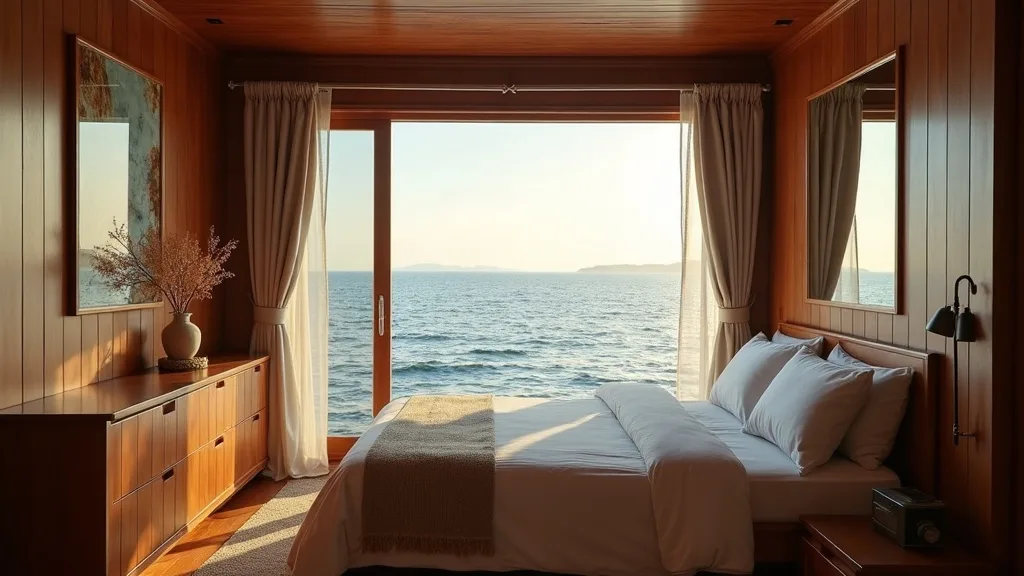
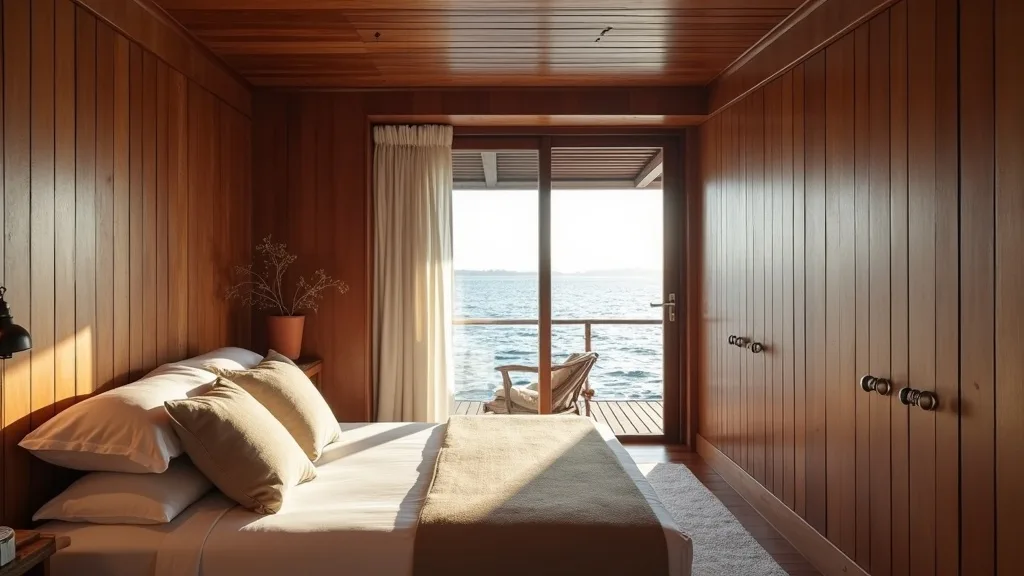
Cabin configuration decides more about a family trip than anything except the route. Triple cabins exist on most phinisi but there are rarely more than one or two; genuine quads are rare. Adjoining cabins with a shared companionway are the usual solution for a family of four.
| Cabin type | Typical occupancy | Notes | Rate band |
|---|---|---|---|
| Master cabin | 1–2 adults + cot | Usually largest, ensuite, best ventilation | Premium band |
| Double ensuite | 2 adults or 1 adult + 1 child | Standard family unit | Mid to premium band |
| Twin ensuite | 2 children or 2 adults | Often paired with a double nearby | Mid band |
| Triple / bunk cabin | 1 adult + 2 children | Limited availability — book early | Value to mid band |
What does a family week cost?
| Cabin standard | Per person, per night | 7 nights per person | Family of four, 7 nights |
|---|---|---|---|
| Value / simpler vessel | USD 250–350 | USD 1,750–2,450 | USD 7,000–9,800 |
| Mid-range ensuite twin | USD 350–500 | USD 2,450–3,500 | USD 9,800–14,000 |
| Premium double / deluxe | USD 500–650 | USD 3,500–4,550 | USD 14,000–18,200 |
| Whole-boat family charter (12 berths) | — | USD 25,200–42,000 per boat | Divide by your headcount |
Rates are indicative market bands for the 2026–2027 season, quoted per person in USD on a shared twin basis unless stated. They move with vessel, cabin, season and group size, and they change — ask us for the live rate on your dates before you plan a budget around them.
Child rates are not standard across the fleet: some vessels discount children sharing with two adults, others do not discount at all. Ask specifically. Once you are past six family members, a whole-boat charter usually costs about the same and behaves far better — see the private charter page.
Tell us your ages and dates and we will map the right route. Talk to Komodo Luxury on WhatsApp at +62 811 3823 875 or email [email protected] and we will send the boats, dates and exact rates that match your window.
Which Raja Ampat fees are not included in the trip price?
Two separate government charges apply in Raja Ampat, and most websites merge them into one wrong number. They are collected by different bodies, cost different amounts and have different validity. Budget for both.
| Charge | Who collects it | Foreign visitor | Indonesian visitor | Validity |
|---|---|---|---|---|
| Marine park conservation card (the “PIN card”) | Raja Ampat Marine Park Authority, under West Papua Governor’s Regulation No. 4 of 2019 | IDR 700,000 | IDR 425,000 | 12 months from purchase; children under 12 exempt |
| Visitor entry ticket | Raja Ampat Regency, paid through the SIPARI platform | IDR 1,000,000 | IDR 300,000 | Per visit, in force since 1 January 2026 |
Neither charge is normally inside a liveaboard fare. Your crew will usually arrange the conservation card on your behalf at the start of the trip and add it to your onboard bill. Fees are set by government and can be revised — confirm the current amounts with us before you travel.
What is included in the fare, and what is not?
| Normally included | Normally extra |
|---|---|
| Cabin accommodation for the full charter | Marine park conservation card (IDR 700,000 foreign) |
| All meals, snacks, soft drinks, tea and coffee | Regency visitor entry ticket (IDR 1,000,000 foreign) |
| Guided dives as per the itinerary, tanks and weights | Nitrox fills and dive courses |
| Dive guides, cruise director and full crew | Equipment rental if you do not bring your own |
| Tenders, kayaks and snorkelling gear | Alcohol and premium drinks |
| Group transfers on embarkation and disembarkation day | Flights, pre- and post-trip hotels, dive insurance, crew tips |
Inclusions vary slightly between vessels. We send you the exact line-by-line list for the boat you are considering before you pay anything.
What does a family day on board look like?
Divers go at around 07:00, 11:00 and 15:00. Between those, the tender runs snorkellers to a shallow reef, kayaks come off the back deck, and there is usually a beach or a village landing in the afternoon. Children eat when everyone else eats — five times a day, in practice, because a dive boat feeds constantly.
Two rules keep it calm. First, one adult always stays topside; splitting a couple across the dive rotation is worth more than an extra dive. Second, village visits follow the crew’s lead on etiquette: ask before photographing people, cover shoulders and knees ashore, and let the crew handle any gifts rather than handing things directly to children.
What about safety?
Ask any operator, including us, for specifics: guide-to-guest ratio in the water, whether oxygen and a first-aid kit are carried and who is trained to use them, life jacket sizes for children, the tender driver’s protocol, and the evacuation plan from the most remote point of the route. The final day carries no diving at all, which protects the 18-hour no-fly interval before your flight home. Our Raja Ampat liveaboard FAQ covers the full checklist.
What makes a Raja Ampat liveaboard genuinely low-impact?
“Eco” on a boat is a set of habits, not a wooden hull. A traditional phinisi is built by hand from dense tropical hardwood at Tana Beru and Bira in South Sulawesi — a craft inscribed on the UNESCO Intangible Cultural Heritage list in 2017 — and its genuine advantage is a long hull life that can be repaired locally. That is a real argument. It is not, on its own, a sustainability claim.
The practices that actually change a boat’s footprint are these: a reverse-osmosis watermaker instead of crates of bottled water, solar and battery capacity that cuts generator hours at anchor, no single-use plastic aboard, a reef-safe sunscreen briefing on day one, mooring buoys or sand-anchoring only — anchoring on coral is prohibited inside the marine protected area — sorted waste carried back to shore rather than burnt or dumped, holding tanks that are never discharged near a reef, and a Papuan and Indonesian crew paid properly. Ask any operator, including us, to answer those eight points specifically. Vague language is the tell.
Frequently asked questions
Can children go on a Raja Ampat liveaboard?
Yes, on the right route. Families do best on a 6-7 night central itinerary in the Dampier Strait and the Fam islands, where crossings are short and sheltered. The long overnight passages to Wayag or Misool are a poor fit for young children.
What is the minimum age to dive?
Under PADI standards, children can try a pool-based Bubblemaker experience from age 8, and Junior Open Water certification starts at 10 with depth limits that tighten below age 12. Junior divers must dive with a certified adult or professional. Snorkelling has no age minimum, only competence and supervision.
Is Raja Ampat safe for a child who only snorkels?
The sheltered sites are excellent for it – Arborek jetty, Friwen Wall and the surface view over Manta Sandy are all shallow and calm. The non-negotiables are a buoyancy aid, an adult in the water within arm’s reach and a crew member in the tender.
Do we need a private charter, or can we join a shared boat?
Both work. Shared departures are cheaper and fine for teenagers who dive. For children under about 12, or for a group of more than six family members, a private charter is usually better value and far less stressful, because the daily schedule is yours.
Are there family cabins?
Most vessels have at least one triple or a pair of adjoining cabins. Genuine quad cabins are rare. We check the actual deck plan of the boat before quoting rather than assuming, and we tell you exactly which cabins share a wall.
What do children do while the adults dive?
A well-run family trip has a parallel programme: snorkel drops from the tender, kayaks and paddleboards, beach landings, a village visit, and the viewpoint hikes at Penemu or Wayag. The boat is never empty of crew.
How bad is seasickness for children?
On the central route, usually mild – the boat moves at night in sheltered water. Bring the medication your paediatrician recommends and start it before you sail. Children who feel unwell recover faster on the shaded main deck than in a cabin.
Do children pay the Raja Ampat fees?
Children under 12 are exempt from the marine park conservation card. The regency visitor entry ticket is charged per visitor – confirm the current child policy with us close to your travel date, as the ticket scheme has been revised recently.
How do you book this trip?
School-holiday weeks in December and April are the first to go. Send us your travel window, your certification level and how many people are in your party on WhatsApp +62 811 3823 875 or by email at [email protected]. We reply with the vessels available for those dates, the cabin-by-cabin rate, the deposit terms and a plain list of what is not in the price. There is no obligation and no deposit until you have seen the boat and the itinerary in writing.
This site is operated by Komodo Luxury, part of Juara Holding Group, running dive and cruise trips in eastern Indonesia since 2015.