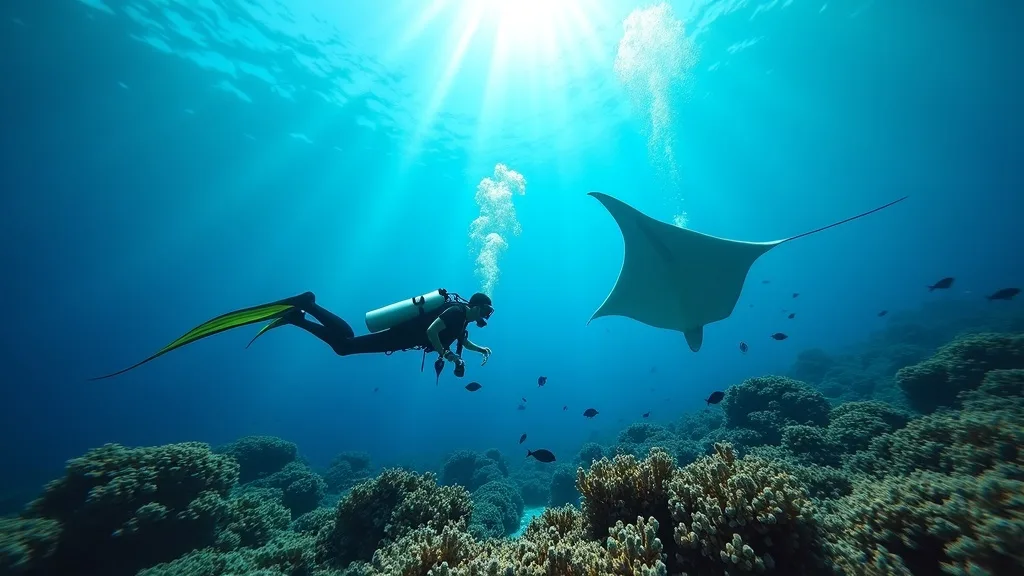
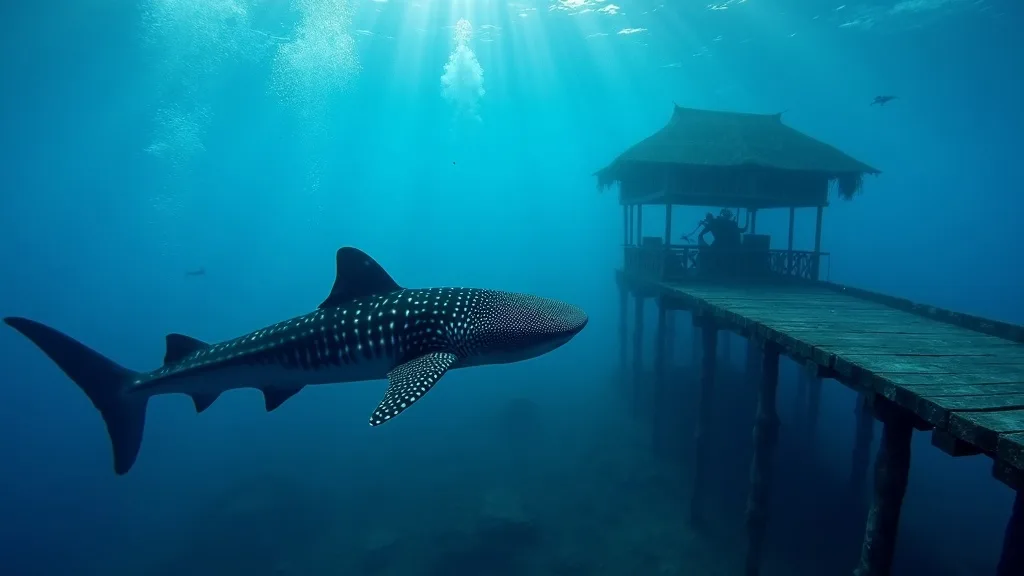
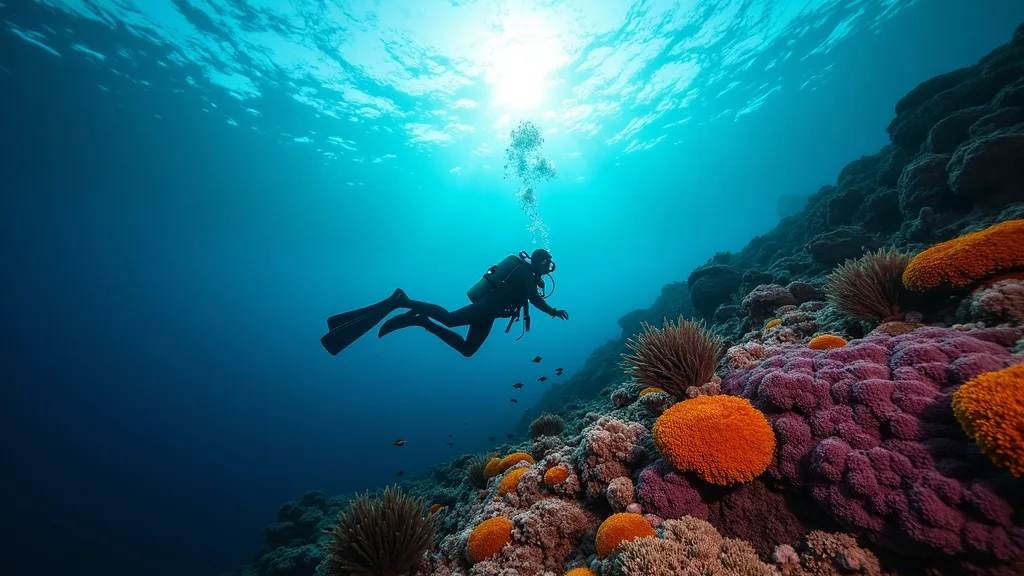
Raja Ampat currents range from nothing to genuinely strong, and they are site-specific and tide-specific rather than constant. Sardine Reef, Cape Kri and Blue Magic can run hard; Melissa’s Garden and Arborek are usually gentle. Reading the tide and moving the schedule around it is the real skill — and it belongs to the crew, not to you.
Why does Raja Ampat have current at all?
The archipelago sits on the seam between the Pacific and Indian Oceans, and the water moving between those two basins has to squeeze through the gaps between roughly 1,500 islands, cays and shoals. The Dampier Strait — the channel between Waigeo and Batanta — is the most famous of those gaps. What you feel underwater is tidal exchange being funnelled through a narrow passage, not an ocean-scale river.
That distinction matters. Tidal current is predictable: it builds, peaks, slackens and reverses on a cycle a crew can read days in advance. It is also why the reefs are so productive — the flow that pushes you along the wall delivers the plankton that feeds the fish biomass Raja Ampat is famous for. A single dive at Cape Kri produced a record 374 fish species, counted by ichthyologist Dr Gerald Allen.
Which sites actually run hard, and which are gentle?
The table below is a working guide, not a guarantee: any site can be flat on a neap tide and difficult on a spring tide. Read the logged-dive column as what most operators, including us, expect before putting you in the water there.
| Dive site | Region | Typical current | Usual entry | Sensible minimum experience |
|---|---|---|---|---|
| Cape Kri | Dampier Strait | Moderate to strong on a running tide | Negative or roll-and-drop | 30+ logged dives, good buoyancy |
| Sardine Reef | Dampier Strait | Often strong; big schools when it runs | Negative entry, hook in | 40+ logged dives, reef hook competence |
| Blue Magic | Dampier Strait (offshore seamount) | Moderate to strong, exposed | Negative entry onto the pinnacle | 40+ logged dives, drift-pickup experience |
| Manta Sandy | Dampier Strait | Mild to moderate | Backward roll, settle behind the viewing line | 10+ logged dives; snorkel-friendly |
| Arborek jetty | Dampier Strait | Usually mild | Giant stride from the tender | Open Water; excellent for snorkellers |
| Melissa’s Garden | Fam / Penemu | Usually mild | Backward roll | Open Water |
| Boo Windows | Misool | Mild to moderate; surge in the swim-throughs | Backward roll | 20+ logged dives |
| Magic Mountain (Karang Bayangan) | Misool | Moderate to strong on the pinnacle | Negative entry, hook in | 40+ logged dives |
| Four Kings | Misool | Moderate to strong between the pinnacles | Negative entry | 40+ logged dives |
| Chicken Reef | Kawe / north | Moderate, can accelerate | Negative entry | 30+ logged dives |
| Wayag lagoon shallows | Far north | Minimal | From the tender or the beach | Any level; snorkel and freedive |
What do the briefing words actually mean?
- Negative entry. You empty your BCD before rolling in and descend immediately, so the group is not scattered on the surface by current before the dive starts.
- Hooking in. Setting a reef hook into dead rock or rubble so you can hang and watch without finning. Never into living coral.
- Drift pickup. The tender follows your bubbles or your SMB and collects you wherever you surface. It is the normal end to a dive here, not an emergency.
- Downcurrent. Water moving down a wall or off a pinnacle. The response is to swim laterally away from the wall, not up against it, then ascend once you are clear.
Which skills actually matter here?
Not the ones people expect. Deep-diving experience is close to irrelevant — most Raja Ampat diving sits between 12 and 25 metres. What matters is:
Buoyancy. You will hover close to reef in moving water; a diver who sinks onto coral when they stop finning is a problem for the reef and for their own air. Reef hook use. Practise on a calm site before you need it on a pinnacle. SMB deployment. One-handed, at depth. If you cannot do this, say so on day one and a guide will run you through it. Staying low. Current is weakest within a metre of the substrate; the instinct to rise is what gets you swept off the site.
If you would like those skills consolidated before the harder sites, the onboard dive course and nitrox programme can run a skills refresher on day one, and an Advanced Open Water or Nitrox certification over the first half of the trip.
How should a good boat schedule around the tide?
Badly run boats dive the site they promised at the time they promised it. Well-run boats publish an indicative site list and then move it. On a normal day you should expect three day dives plus an optional night dive, with the timings shifting by up to two hours between days as the tide moves — that irregularity is a good sign, not a scheduling failure. See how many dives a day you actually get for what a realistic dive count looks like across itinerary lengths.
A crew should also be willing to cancel. If the tide window was missed or the wind has come up on an exposed pinnacle, the correct answer is a different site. Ask on day one what the cancellation criteria are.
Which routes forgive inexperience, and which do not?
| Route | Nights | Current exposure | Suits |
|---|---|---|---|
| Central / Dampier Strait | 6–7 | Mixed — wide choice of easy and hard sites | First liveaboard, 20–40 logged dives |
| South Misool + Central | 8–9 | Moderate to high on the Misool pinnacles | 40+ logged dives, comfortable in drift |
| North Wayag + Central | 9–11 | Moderate; more open-water transit than current | 30+ logged dives, sea-legs required |
| Grand north-to-south | 12–14 | The full spread, including the hardest sites | Experienced divers, 60+ dives |
| Banda Sea crossing | 11–14 | Open ocean legs, walls and seamounts | Experienced divers only |
If this is your first liveaboard, the honest recommendation is a central route. The beginner-friendly six to seven night package is built around exactly that logic, and the Dampier Strait itinerary page lists the sites night by night so you can see the difficulty spread before you commit.
What about safety cover in a remote archipelago?
Current is a manageable, briefable condition. Distance is what actually changes the risk calculation. Dive accident insurance is not optional on a serious Raja Ampat trip — the reasoning is set out in full in our guide to dive insurance, oxygen and evacuation in Raja Ampat.
Not sure whether your experience level matches the route you want? Message Komodo Luxury on WhatsApp at +62 811 3823 875 or email [email protected] with your travel window, certification level and party size. We reply with the vessels available on those dates, the cabin-by-cabin rate and a plain list of what is not in the price.
Frequently asked questions
Are the currents in Raja Ampat too strong for a newly certified diver?
Not across the board. A central Dampier Strait itinerary contains plenty of sites that a diver with 20 to 30 logged dives can handle comfortably, and the schedule is built around slack and turning tides. The sites that genuinely punish inexperience are the exposed seamounts – Blue Magic, Sardine Reef, Cape Kri on a running tide – and a good guide simply reschedules or reassigns those dives rather than putting an unready diver on them.
What is a reef hook and do I have to use one?
A reef hook is a stainless hook on a short line clipped to your BCD, set into dead rock or rubble so you can hang in current without finning and without touching coral. It is not mandatory, but on high-current sites it is the difference between watching a school of trevally for fifteen minutes and being swept off the site in two. Never hook into living coral – dead rock, sand anchors or bare substrate only.
Do currents in Raja Ampat run all day?
No. Current here is driven by tidal exchange, so it builds, peaks and slackens on a cycle. That is precisely why liveaboard schedules look irregular: a 06:30 dive followed by a 10:45 dive rather than neat three-hour gaps. The crew is chasing the tide window for each specific site, not running a timetable.
What happens if the current is stronger than briefed?
The standard protocol is to abort onto the reef, hook or shelter behind structure, and deploy an SMB before ascending in blue water so the tender can find you. Any competent Raja Ampat operation runs live-boat pickups, keeps eyes on the water and briefs a lost-buddy and downcurrent procedure before you get in. If a briefing does not cover downcurrent, ask.
Is snorkelling safe in these conditions?
At the right sites, yes. Manta Sandy, Arborek jetty, the Fam shallows and most Misool lagoon sites are gentle enough to snorkel. Snorkellers should not be dropped on Sardine Reef or Cape Kri on a running tide – if a boat is offering that, it is a warning sign about how it manages risk generally.
Which itinerary is the most forgiving for a nervous diver?
A six or seven-night central route based around the Dampier Strait, because the boat stays inside sheltered island groups, the crossings are short and the site list has a wide spread of difficulty. Grand north-to-south expeditions and Banda Sea crossings involve more open water and less flexibility to swap a site out.
This guide is published by the team behind this Raja Ampat eco liveaboard site — Komodo Luxury, part of Juara Holding Group, running dive and cruise operations in eastern Indonesia since 2015. Questions on a specific date or vessel: WhatsApp +62 811 3823 875, email [email protected].