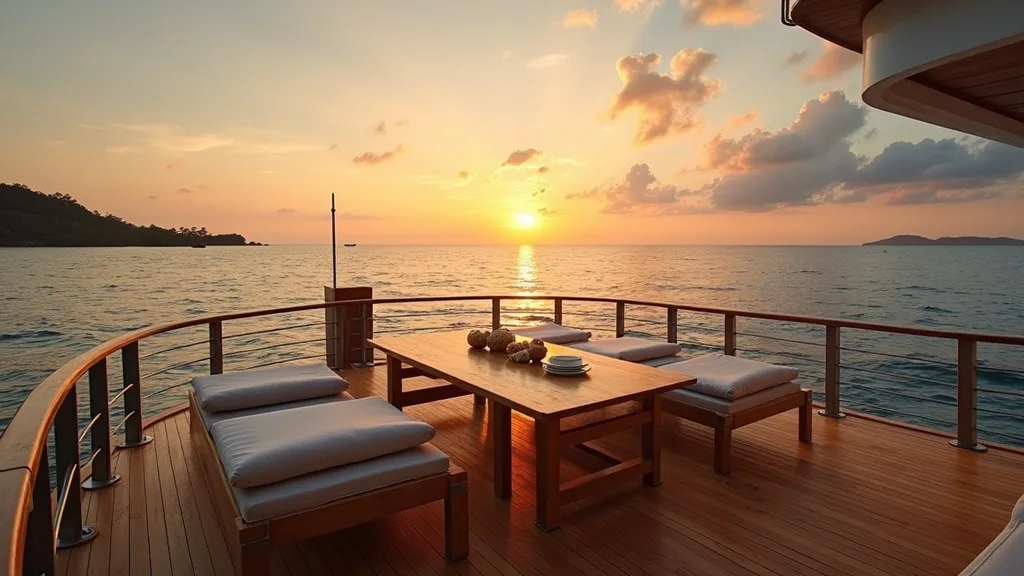
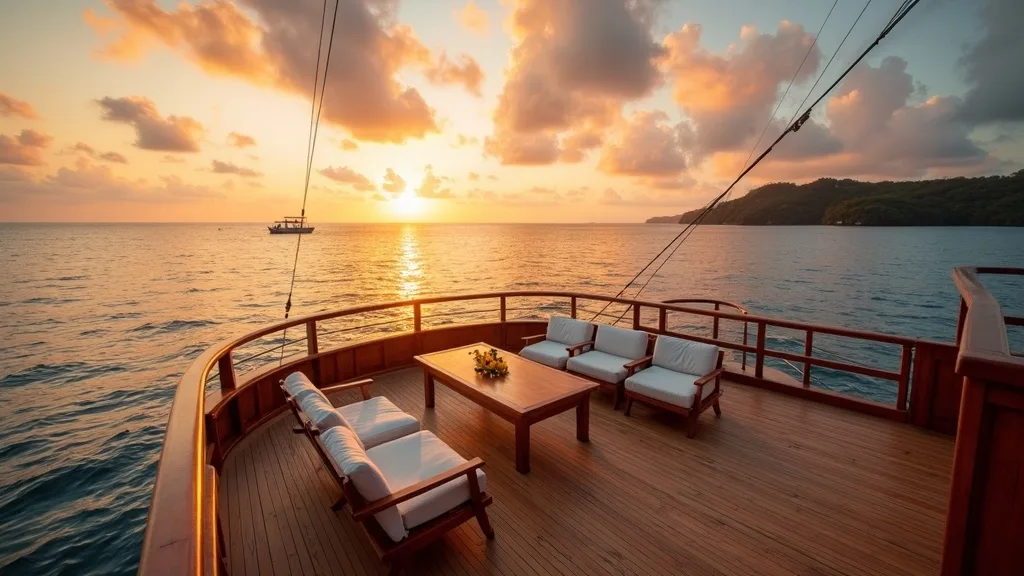
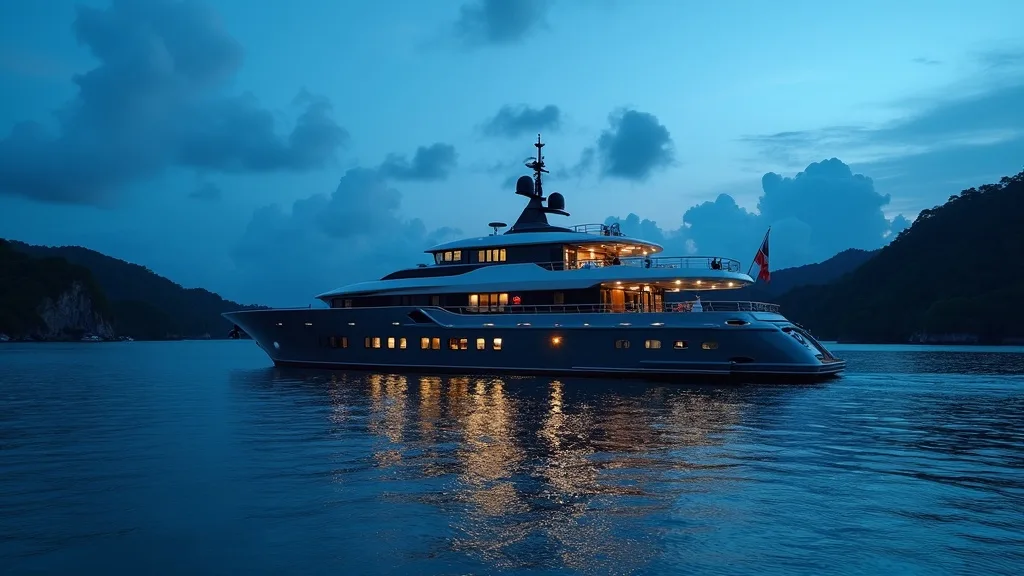
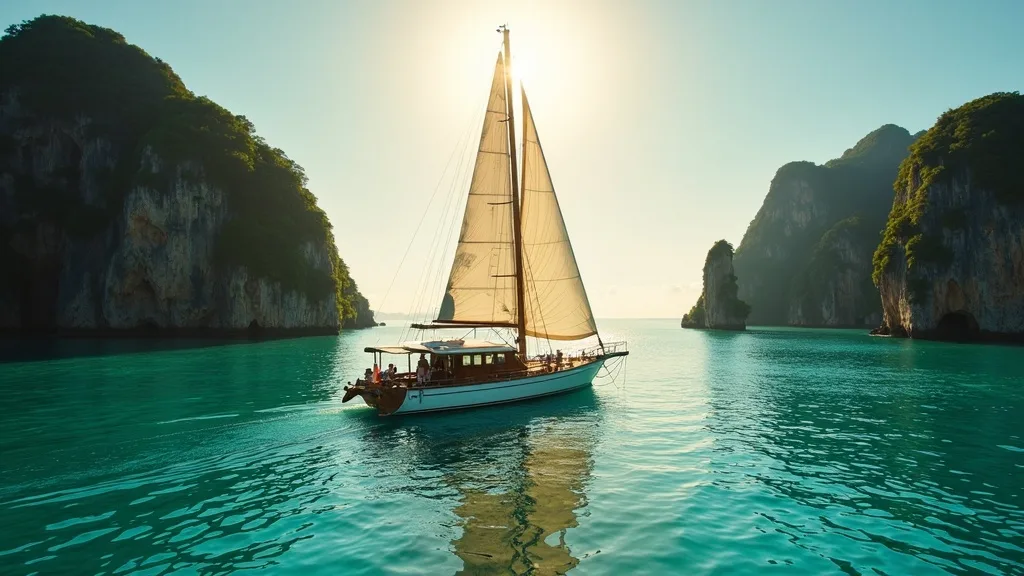
A whole-boat charter in Raja Ampat means your group sets the route, the dive schedule and the departure date. Vessels typically carry 8–16 guests, the minimum is six nights, and the boat is priced per night as a unit rather than cabin by cabin.
Have a group and a date in mind? Talk to Komodo Luxury on WhatsApp at +62 811 3823 875 or email [email protected] and we will send the boats, dates and exact rates that match your window.
What do you actually get when you charter the whole boat?
On a shared departure the itinerary is fixed, the dive times are set by the majority, and you share the tender and the guides with strangers. On a charter, all of that becomes yours. In practice the difference shows up in small, decisive ways: a second run at Magic Mountain because the light was wrong the first time, breakfast at 05:30 because your photographers want the early slot, a whole afternoon at a village because your family wanted to stay.
| Shared departure | Private charter | |
|---|---|---|
| Route and dive sites | Fixed, published in advance | Built around your group, adjusted daily |
| Departure date | From the published schedule | Any date within the operating season |
| Dive times | Set by the cruise director for all guests | Set with your group leader |
| Guide ratio | Usually 1:4 | As low as you are willing to pay for |
| Non-diver programme | Limited to what the schedule allows | Can run in parallel all week |
| Cost basis | Per person, per cabin | Per vessel, per night |
| Best for | Solo travellers, couples, flexible budgets | Dive clubs, families, photo teams, corporate groups |
Who charters a boat in Raja Ampat?
Four groups, mostly. Dive clubs and shops bringing 10–16 members, often with their own instructor. Photography and video teams who need the schedule built around light and want a camera table nobody else is using — our photography liveaboard page goes into what that requires. Extended families and multi-generational groups, where half the party dives and half snorkels or stays topside; see the family charter page. And corporate, incentive and research groups, including NGO and citizen-science trips that need a stable platform in remote water.
How is a custom route built?
We start from your dates, because the season decides more than anything else. Raja Ampat runs October to April; outside that window many vessels reposition to Komodo or the Banda Sea and the northern passages get rough. Within the season, the second constraint is distance: six nights reaches the Dampier Strait and the Fam islands comfortably, nine to eleven nights reaches Wayag or Misool, and twelve or more reaches both.
From there we work backwards from what your group actually wants — mantas, soft coral, macro, topside scenery, quiet anchorages — and produce a route with realistic sailing times, a dive count as a range and named alternatives for each day in case of weather. The grand expedition itinerary is a good template for a long charter; the Dampier Strait route for a short one.
What does a private charter cost?
Charter rates are quoted for the vessel per night. The most useful way to sanity-check a quote is to divide it by the number of berths and compare the result with the per-person market bands.
| Vessel size | Per night, whole boat | Per berth, per night | 7-night charter total |
|---|---|---|---|
| 8-guest wooden phinisi | USD 2,400–3,600 | USD 300–450 | USD 16,800–25,200 |
| 12-guest phinisi or small dive yacht | USD 3,600–6,000 | USD 300–500 | USD 25,200–42,000 |
| 16-guest premium vessel | USD 6,400–9,600 | USD 400–600 | USD 44,800–67,200 |
| Ultra-luxury charter yacht | USD 10,000–16,000+ | USD 650–800+ | USD 70,000–112,000+ |
Rates are indicative market bands for the 2026–2027 season, quoted per person in USD on a shared twin basis unless stated. They move with vessel, cabin, season and group size, and they change — ask us for the live rate on your dates before you plan a budget around them.
What scales with guest numbers rather than with the charter fee: park and entry fees, nitrox, equipment rental, alcohol and crew tips. What does not: fuel, crew, food and the vessel itself, which is why filling the boat improves your per-head number so sharply.
Send us your dates and headcount for a firm charter quote. Talk to Komodo Luxury on WhatsApp at +62 811 3823 875 or email [email protected] and we will send the boats, dates and exact rates that match your window.
Which Raja Ampat fees are not included in the trip price?
Two separate government charges apply in Raja Ampat, and most websites merge them into one wrong number. They are collected by different bodies, cost different amounts and have different validity. Budget for both.
| Charge | Who collects it | Foreign visitor | Indonesian visitor | Validity |
|---|---|---|---|---|
| Marine park conservation card (the “PIN card”) | Raja Ampat Marine Park Authority, under West Papua Governor’s Regulation No. 4 of 2019 | IDR 700,000 | IDR 425,000 | 12 months from purchase; children under 12 exempt |
| Visitor entry ticket | Raja Ampat Regency, paid through the SIPARI platform | IDR 1,000,000 | IDR 300,000 | Per visit, in force since 1 January 2026 |
Neither charge is normally inside a liveaboard fare. Your crew will usually arrange the conservation card on your behalf at the start of the trip and add it to your onboard bill. Fees are set by government and can be revised — confirm the current amounts with us before you travel.
How does the booking process work?
- Enquiry — dates, group size, certification mix, what the group wants from the week.
- Options — we come back with the vessels genuinely free on those dates, with deck plans, cabin configurations and a draft route.
- Courtesy hold — a short no-cost hold on the boat while your group confirms.
- Deposit and contract — charter agreement signed, deposit paid, dates locked.
- Planning — final route, dietary requirements, gear list, rooming, arrival flights.
- Balance — settled before departure on the schedule agreed in the contract.
Deposit percentages, balance dates and cancellation windows differ by vessel; the full terms are on our inclusions and booking page and are always confirmed in writing before you pay.
What makes a Raja Ampat liveaboard genuinely low-impact?
“Eco” on a boat is a set of habits, not a wooden hull. A traditional phinisi is built by hand from dense tropical hardwood at Tana Beru and Bira in South Sulawesi — a craft inscribed on the UNESCO Intangible Cultural Heritage list in 2017 — and its genuine advantage is a long hull life that can be repaired locally. That is a real argument. It is not, on its own, a sustainability claim.
The practices that actually change a boat’s footprint are these: a reverse-osmosis watermaker instead of crates of bottled water, solar and battery capacity that cuts generator hours at anchor, no single-use plastic aboard, a reef-safe sunscreen briefing on day one, mooring buoys or sand-anchoring only — anchoring on coral is prohibited inside the marine protected area — sorted waste carried back to shore rather than burnt or dumped, holding tanks that are never discharged near a reef, and a Papuan and Indonesian crew paid properly. Ask any operator, including us, to answer those eight points specifically. Vague language is the tell.
Frequently asked questions
How many people do you need for a private charter?
Enough to fill the boat, which in Raja Ampat usually means 8-16 guests depending on the vessel. Smaller wooden phinisi take 8-12; larger steel dive yachts take 16-20. You can charter with fewer people, you simply pay for the empty cabins.
What is the minimum charter length?
Six nights in Raja Ampat, and most groups take seven. Anything shorter spends a disproportionate share of the charter repositioning from and to Sorong.
Is a private charter more expensive per person?
Not necessarily. If you fill the boat, the per-head cost usually lands close to the per-cabin rate, and sometimes below it in shoulder season. What you buy is control, not luxury: your route, your dive times, your dates.
Can we design our own route?
Within the season and the sea state, yes. The two fixed constraints are the October-April window and the physical distance between regions – Misool and Wayag cannot both be reached properly in six nights. Everything else, including how many dives a day and how much topside time, is yours to set.
What deposit is required to hold a charter?
Charter holds typically need a deposit at the time of confirmation with the balance due well before departure, and the exact percentage and dates vary by vessel. We put the full schedule in writing before you transfer anything.
Do park fees change on a private charter?
No. The marine park conservation card and the regency visitor entry ticket are per person and apply exactly the same way. Charter pricing covers the vessel; government fees remain individual.
Can we bring our own dive instructor or photo pro?
Yes, and many groups do. Tell us in advance so the crew can plan briefings and tank logistics around your leader, and so we can confirm insurance and guiding arrangements for the vessel.
How far ahead should a charter be booked?
Nine to eighteen months for peak weeks between December and March. Shoulder dates in October, November and April are sometimes available six months out, and occasional gaps open at shorter notice when a group changes plans.
How do you book this trip?
Peak charter weeks are held nine to eighteen months out. Send us your travel window, your certification level and how many people are in your party on WhatsApp +62 811 3823 875 or by email at [email protected]. We reply with the vessels available for those dates, the cabin-by-cabin rate, the deposit terms and a plain list of what is not in the price. There is no obligation and no deposit until you have seen the boat and the itinerary in writing.
This site is operated by Komodo Luxury, part of Juara Holding Group, running dive and cruise trips in eastern Indonesia since 2015.