The 12–14 night grand expedition is the only Raja Ampat itinerary that covers all three regions in one trip — Wayag in the north, the Dampier Strait in the centre and Misool in the south — with typically 30–40+ dives. It is the archipelago seen whole, and it runs only a few times each season.
Two weeks free between October and April? Talk to Komodo Luxury on WhatsApp at +62 811 3823 875 or email [email protected] and we will send the boats, dates and exact rates that match your window.
How is a north-to-south expedition structured?
Geography dictates the shape. Wayag sits at the north-western limit of the archipelago and Misool at the southern, roughly 250 nautical miles apart, with the Dampier Strait in between. A grand expedition sails the length of that line once, which is why it cannot be compressed.
| Nights | Region | Signature sites | Dives (range) | Sailing |
|---|---|---|---|---|
| Nights 1–3 | Dampier Strait | Cape Kri, Sardine Reef, Blue Magic, Manta Sandy | 8–11 | Short repositioning only |
| Nights 4–6 | Fam, Penemu & Kawe | Melissa’s Garden, Chicken Reef, Penemu viewpoint | 8–10 | 2–4 h daytime hops |
| Nights 7–8 | Wayag & Uranie | Blacktip nursery, lagoon, karst viewpoint hike | 4–6 | Overnight passage north |
| Night 9 | Open-water passage south | Sailing day, one dive if timing allows | 0–1 | 8–10 h overnight |
| Nights 10–13 | Misool | Magic Mountain, Boo Windows, Four Kings, Fiabacet, Yilliet | 12–16 | Settled, short hops |
| Night 14 | Return to Sorong | No diving; 18-hour no-fly interval | 0 | Overnight passage |
Some vessels run the route in reverse, or one-way with a different embarkation port. Both work. What matters is that the two long passages fall at night and that the cruise director has the freedom to re-order for weather.
What does the Misool crossing actually feel like?
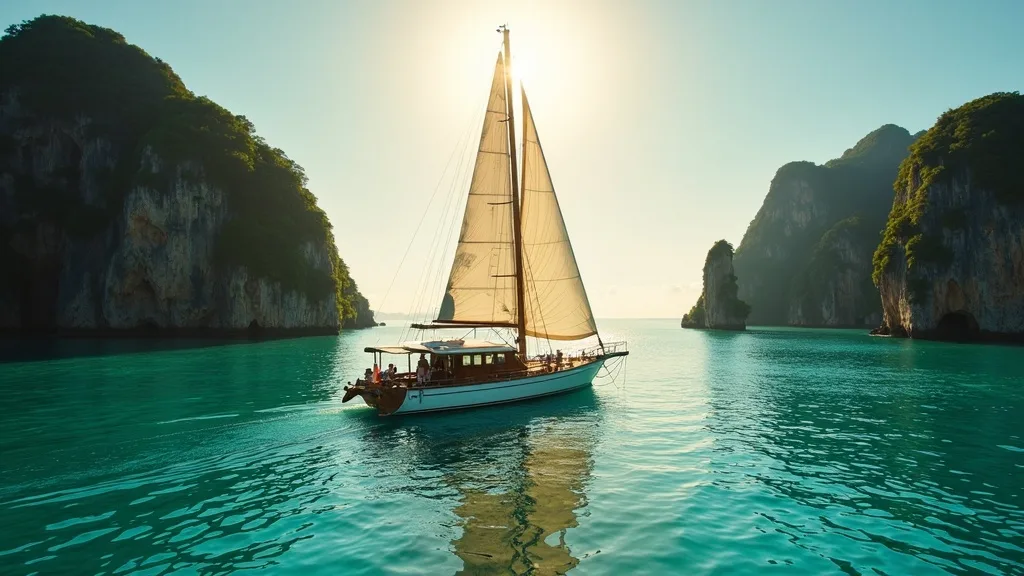
Honest answer: it is the part of the trip people remember for the wrong reasons if they are not prepared. You leave the shelter of the central islands in the late afternoon and cross open water for eight to ten hours. Inside the season the sea is usually moderate, but a phinisi rolls, and rolling in a bunk at 02:00 is a different experience from rolling on a sundeck at noon.
What helps, in order: take motion sickness medication the evening before, not when you already feel unwell; sleep low and amidships if you can choose; eat something dry; stay out of the cabin during daylight hours. Nearly everyone is fine by breakfast, and Misool is worth it.
What do you dive in the south that you cannot dive in the north?
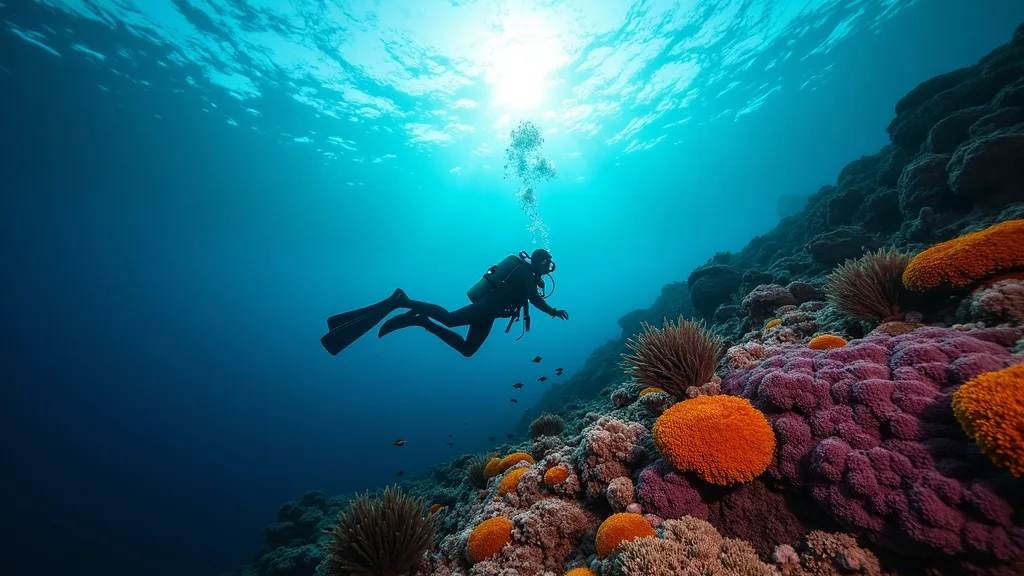
Misool is the soft coral half of Raja Ampat. Where the Dampier Strait delivers fish biomass on hard coral slopes, the southern pinnacles are upholstered in soft coral and sea fans, and the topography is more dramatic.
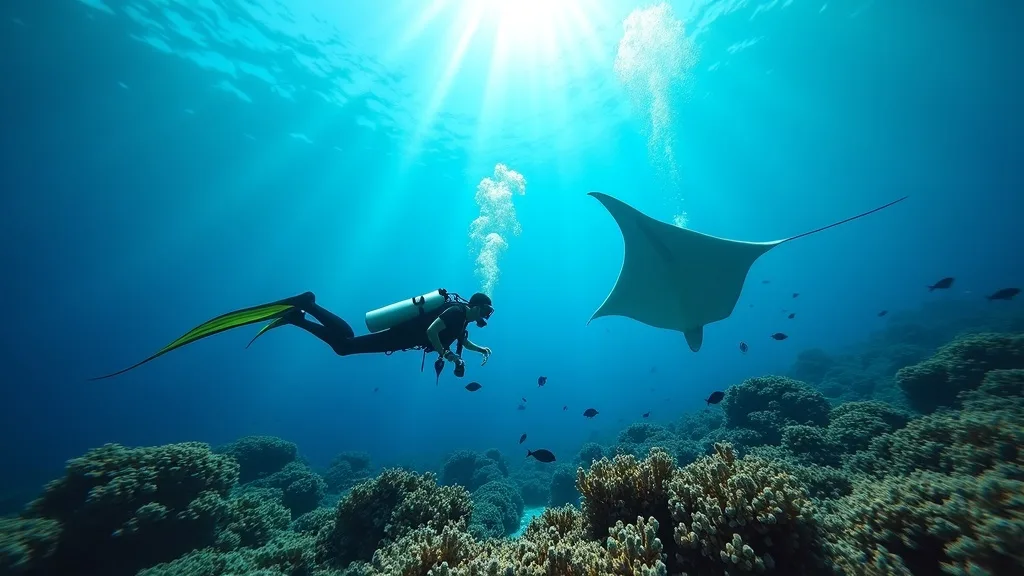
- Magic Mountain (Karang Bayangan) — a seamount that works as a cleaning station for both reef and oceanic mantas, with current and big-fish traffic.
- Boo Windows — two swim-through “windows” in a rock wall, one of the most photographed formations in Indonesia.
- Four Kings — four pinnacles rising from the blue, soft coral on every face and schooling fish in the channels between them.
- Fiabacet and Yilliet — dense sea fans, pygmy seahorses on the gorgonians and reliable reef shark sightings.
Northern highlights are set out in detail on the north and Wayag route page, and if you want to go further still, the Banda Sea crossing extends the same idea east.
Where do conservation fees go in Misool?
The Misool Marine Reserve is a no-take zone of roughly 1,200 square kilometres, co-managed by the Misool Foundation with community ranger patrols and a research and education centre. It is the clearest before-and-after case in the region: reef biomass inside the reserve has recovered to a degree that is visible to any diver who saw the area before it was closed to fishing. Raja Ampat also sits inside a shark and ray sanctuary declared in 2013, and inside Indonesia’s nationwide manta sanctuary declared in 2014.
What does a grand expedition cost?
| Cabin standard | Per person, per night | 12 nights | 13 nights | 14 nights |
|---|---|---|---|---|
| Value / simpler vessel | USD 250–350 | USD 3,000–4,200 | USD 3,250–4,550 | USD 3,500–4,900 |
| Mid-range ensuite twin | USD 350–500 | USD 4,200–6,000 | USD 4,550–6,500 | USD 4,900–7,000 |
| Premium double / deluxe | USD 500–650 | USD 6,000–7,800 | USD 6,500–8,450 | USD 7,000–9,100 |
| Ultra-luxury / master cabin | USD 650–800+ | USD 7,800–9,600+ | USD 8,450–10,400+ | USD 9,100–11,200+ |
Rates are indicative market bands for the 2026–2027 season, quoted per person in USD on a shared twin basis unless stated. They move with vessel, cabin, season and group size, and they change — ask us for the live rate on your dates before you plan a budget around them.
Grand expeditions are scheduled a season ahead. Talk to Komodo Luxury on WhatsApp at +62 811 3823 875 or email [email protected] and we will send the boats, dates and exact rates that match your window.
Which Raja Ampat fees are not included in the trip price?
Two separate government charges apply in Raja Ampat, and most websites merge them into one wrong number. They are collected by different bodies, cost different amounts and have different validity. Budget for both.
| Charge | Who collects it | Foreign visitor | Indonesian visitor | Validity |
|---|---|---|---|---|
| Marine park conservation card (the “PIN card”) | Raja Ampat Marine Park Authority, under West Papua Governor’s Regulation No. 4 of 2019 | IDR 700,000 | IDR 425,000 | 12 months from purchase; children under 12 exempt |
| Visitor entry ticket | Raja Ampat Regency, paid through the SIPARI platform | IDR 1,000,000 | IDR 300,000 | Per visit, in force since 1 January 2026 |
Neither charge is normally inside a liveaboard fare. Your crew will usually arrange the conservation card on your behalf at the start of the trip and add it to your onboard bill. Fees are set by government and can be revised — confirm the current amounts with us before you travel.
What is included in the fare, and what is not?
| Normally included | Normally extra |
|---|---|
| Cabin accommodation for the full charter | Marine park conservation card (IDR 700,000 foreign) |
| All meals, snacks, soft drinks, tea and coffee | Regency visitor entry ticket (IDR 1,000,000 foreign) |
| Guided dives as per the itinerary, tanks and weights | Nitrox fills and dive courses |
| Dive guides, cruise director and full crew | Equipment rental if you do not bring your own |
| Tenders, kayaks and snorkelling gear | Alcohol and premium drinks |
| Group transfers on embarkation and disembarkation day | Flights, pre- and post-trip hotels, dive insurance, crew tips |
Inclusions vary slightly between vessels. We send you the exact line-by-line list for the boat you are considering before you pay anything.
What makes a Raja Ampat liveaboard genuinely low-impact?
“Eco” on a boat is a set of habits, not a wooden hull. A traditional phinisi is built by hand from dense tropical hardwood at Tana Beru and Bira in South Sulawesi — a craft inscribed on the UNESCO Intangible Cultural Heritage list in 2017 — and its genuine advantage is a long hull life that can be repaired locally. That is a real argument. It is not, on its own, a sustainability claim.
The practices that actually change a boat’s footprint are these: a reverse-osmosis watermaker instead of crates of bottled water, solar and battery capacity that cuts generator hours at anchor, no single-use plastic aboard, a reef-safe sunscreen briefing on day one, mooring buoys or sand-anchoring only — anchoring on coral is prohibited inside the marine protected area — sorted waste carried back to shore rather than burnt or dumped, holding tanks that are never discharged near a reef, and a Papuan and Indonesian crew paid properly. Ask any operator, including us, to answer those eight points specifically. Vague language is the tell.
Who should do the full north-to-south run?
It suits experienced divers with 50+ logged dives, returning visitors who have already done a central week, photographers who want both wide-angle reefscapes and soft coral, and anyone who can take three weeks off and would rather do Raja Ampat once, properly.
It does not suit new divers, anyone who has never spent a night at sea, or travellers on a fixed one-week holiday — the Dampier Strait route gives you 80% of the diving in half the time. Groups who want the whole vessel to themselves should read the private charter page first.
Frequently asked questions
What makes this different from a standard Raja Ampat trip?
Coverage. A 6-7 night trip sees one region. The 12-14 night grand expedition links all three – Wayag in the north, the Dampier Strait in the centre and Misool in the south – which no shorter itinerary can do, because the Misool crossing alone costs a night at sea in each direction.
How many dives are on a 12-14 night expedition?
Typically 30-40 or more, depending on how many passage days fall in your itinerary and how the group is diving. Passage days lose a dive; settled days in Misool often add a night dive.
How rough is the crossing to Misool?
It is an overnight open-water passage of roughly 8-10 hours and it is the least comfortable part of the trip. Inside the October-April window it is usually manageable; if you are prone to motion sickness, start medication before you sail rather than after.
Is Misool worth the extra nights?
For most divers, yes. The southern reefs carry soft coral density and fish schooling that the central strait does not, and sites like Boo Windows, Magic Mountain and Four Kings are the images people remember. The Misool Marine Reserve is also the single clearest example in Indonesia of protection producing results.
Where does the money from Misool’s protection go?
The Misool Foundation co-manages a no-take marine reserve of roughly 1,200 square kilometres in southern Raja Ampat, funded partly by visitor contributions, with community ranger patrols and a research and education centre. The reserve is a genuine no-take zone, not a label.
What is the single supplement on a long trip?
It matters more here than anywhere, because it is applied per night. On a 13-night trip a 50% supplement on a mid-range cabin adds several thousand dollars. Ask us early – some vessels waive it in shoulder season or offer a same-sex share.
How much leave should I book?
Add three days to the trip length: one for the flight out, one buffer night in Sorong before embarkation and one for the flight home after the no-fly day. A 13-night cruise realistically needs 17 days door to door from Europe.
When does the full north-south route run?
Almost entirely between October and April, and even within that window operators schedule only a handful of grand expeditions per season because they occupy the boat for two weeks. Book these further ahead than any other Raja Ampat itinerary.
How do you book this trip?
Only a handful of full-length expeditions run each season across the whole fleet. Send us your travel window, your certification level and how many people are in your party on WhatsApp +62 811 3823 875 or by email at [email protected]. We reply with the vessels available for those dates, the cabin-by-cabin rate, the deposit terms and a plain list of what is not in the price. There is no obligation and no deposit until you have seen the boat and the itinerary in writing.
This site is operated by Komodo Luxury, part of Juara Holding Group, running dive and cruise trips in eastern Indonesia since 2015.