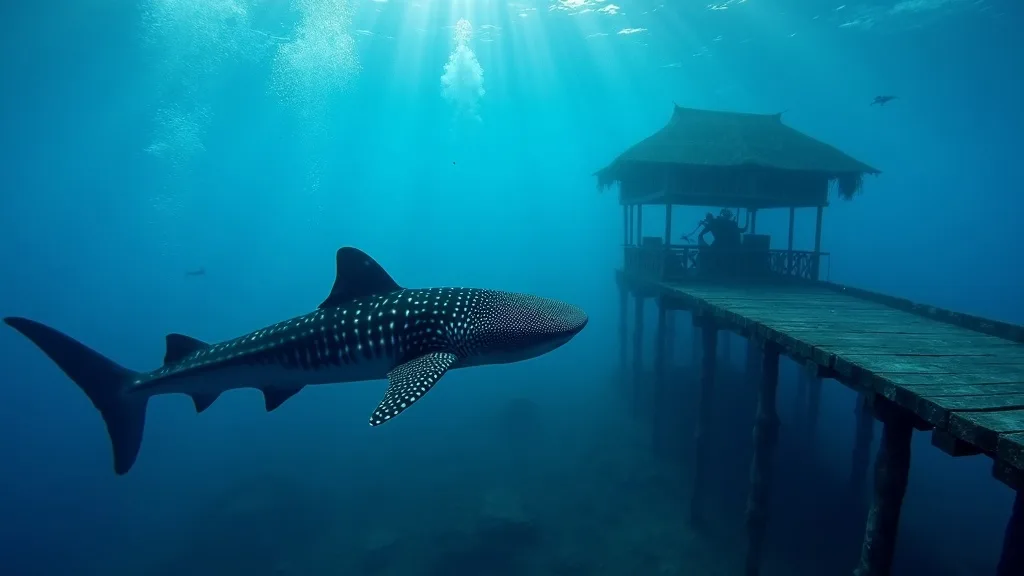
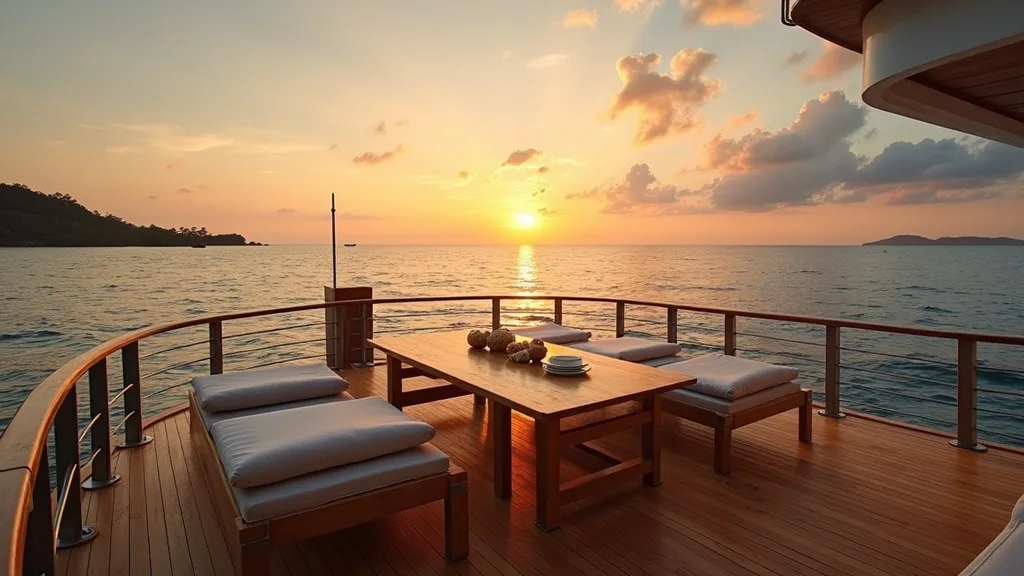
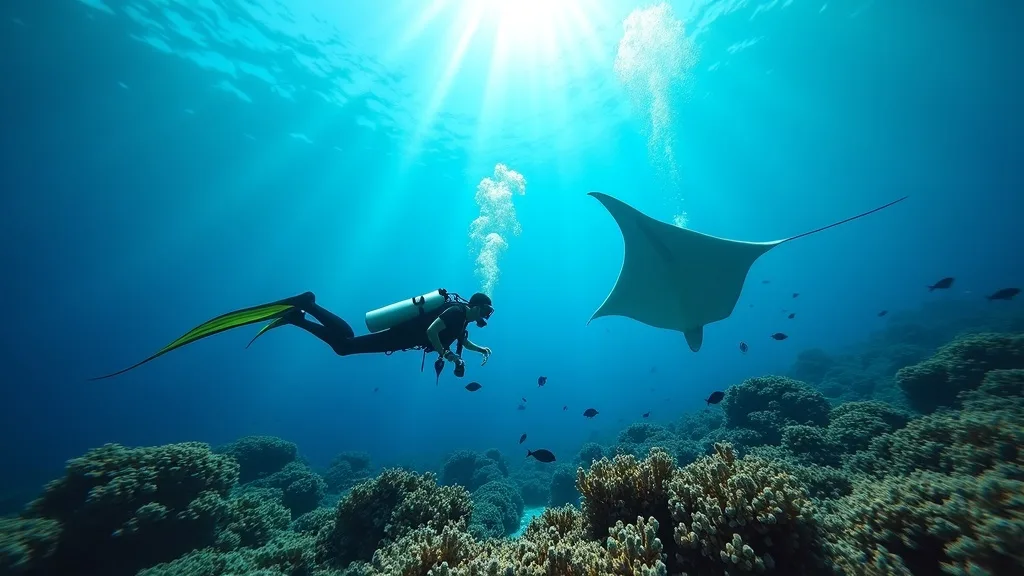
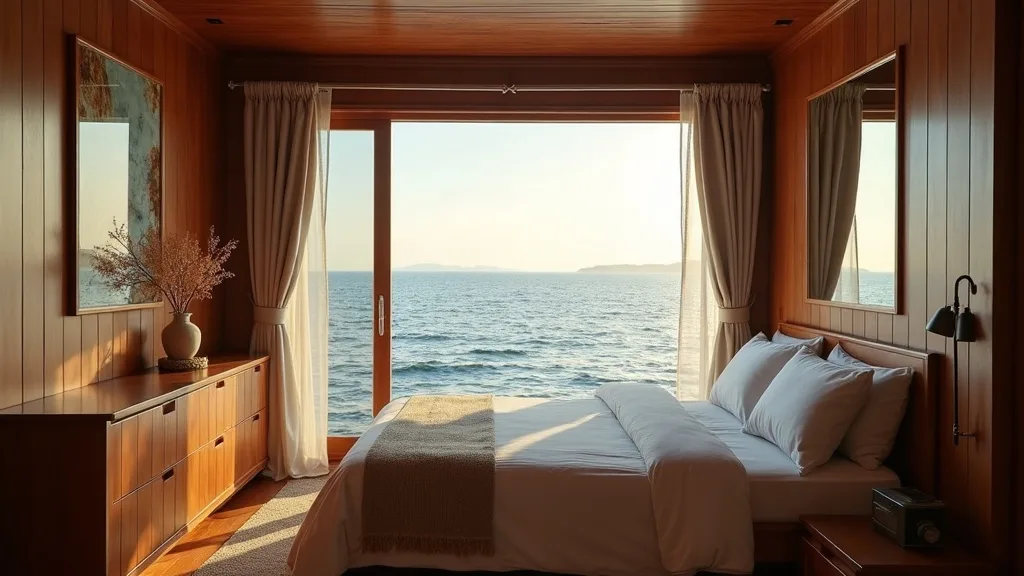
A photography-focused Raja Ampat trip changes three things: smaller buddy groups, sites scheduled for light rather than logistics, and a dedicated camera table with individual charging. The reefs are already world-class — what you are really buying is time and position.
Shooting a Raja Ampat trip this season? Talk to Komodo Luxury on WhatsApp at +62 811 3823 875 or email [email protected] and we will send the boats, dates and exact rates that match your window.
What does a photographer actually need on board?
Ask these questions before you book anything, and treat a vague answer as an answer.
| Facility | What good looks like | Priority |
|---|---|---|
| Dedicated camera table | Dry, padded, fixed to the deck, out of spray | Essential |
| Charging points | Individual sockets per station, 220V, running on inverter as well as generator | Essential |
| Dedicated camera rinse tank | Separate from the mask and regulator tanks, fresh water changed daily | Essential |
| Buddy group size | Four divers per guide or fewer | Essential |
| Tender handling | Crew take and hand back rigs in the water, never pass them over a moving gunwale | Essential |
| Storage | Somewhere dry for a pelican case that is not your bunk | Highly desirable |
| Compressed air blower | For drying housings and O-rings before a lens change | Nice to have |
| Editing space | A table with power that is not the dining table at mealtimes | Nice to have |
Which sites suit which lens?
Raja Ampat sits at the centre of the Coral Triangle, with more than 570 hard coral species — roughly 75% of all known species — and over 1,700 reef fish species. A single dive at Cape Kri produced a record 374 fish species, counted by Dr Gerald Allen. The problem is not finding a subject; it is choosing one before you get in.
| Site | Lens | What you are shooting | Technique note |
|---|---|---|---|
| Cape Kri | Wide-angle, fisheye | Schooling fusiliers, snapper, trevally over a ridge | Negative entry, hook in, shoot into the current |
| Blue Magic | Wide-angle | Reef and oceanic manta, barracuda | Offshore seamount; hold depth and let them come |
| Melissa’s Garden | Wide-angle, close-focus wide | Dense intact hard coral, shallow and bright | Best on a sunny morning; shoot up into the light |
| Manta Sandy | Wide-angle | Reef manta cleaning station | Stay behind the marked line; no chasing |
| Magic Mountain (Misool) | Wide-angle | Manta cleaning seamount, sharks | Current site; secure spare gear before entry |
| Boo Windows (Misool) | Fisheye | Swim-through windows in a rock wall | Diver in the frame makes the shot; brief it topside |
| Sheltered bays and jetties | Macro, super-macro | Nudibranchs, pygmy seahorses, ghost pipefish | Long dives, minimal current, ideal for focus lights |
| Night dives | Macro | Walking (epaulette) sharks, wobbegongs, crustaceans | Red focus light; do not pin subjects with white beams |
What are the light and water conditions?
Water sits at roughly 27–30 °C year-round, and visibility is typically 10–30 metres and better in the drier months. This is a productive, nutrient-rich system — that is why the reefs are what they are — so expect particulate and adjust rather than complain: get close, angle strobes wide and back, shoot upward against the surface where you can, and accept that a 30-metre-visibility day is a gift rather than a baseline.
Season matters. October to April is the main window; outside it many vessels reposition and the northern sites get rough. Full detail on timing is on our schedule and departures page.
What are the ethics of shooting here?
Raja Ampat is a marine protected area inside the Bird’s Head Seascape, roughly one million hectares of it, and the rules exist because they work. Do not brace on live coral to steady a shot — use a single finger on dead rock or nothing at all. Do not move animals for composition. Do not chase mantas or block their route over a cleaning station. Keep strobes off if a guide signals. On night dives, use a red focus light and do not hold a white beam on an animal.
None of this costs you images. The photographers who come home with the best work here are invariably the ones who moved least.
What does a photography trip cost?
| Cabin standard | Per person, per night | 7 nights | 9 nights |
|---|---|---|---|
| Mid-range ensuite twin | USD 350–500 | USD 2,450–3,500 | USD 3,150–4,500 |
| Premium double / deluxe | USD 500–650 | USD 3,500–4,550 | USD 4,500–5,850 |
| Ultra-luxury / master cabin | USD 650–800+ | USD 4,550–5,600+ | USD 5,850–7,200+ |
| Whole-boat photo charter (12 berths) | — | USD 25,200–42,000 per boat | USD 32,400–54,000 per boat |
Rates are indicative market bands for the 2026–2027 season, quoted per person in USD on a shared twin basis unless stated. They move with vessel, cabin, season and group size, and they change — ask us for the live rate on your dates before you plan a budget around them.
Add nitrox, which most photographers should take — see our dive courses and nitrox page — and factor in that a charter for a photo team of ten to twelve often lands close to the shared per-cabin rate while giving you complete control of the schedule (charter details here).
Want a boat that actually has a camera table? Talk to Komodo Luxury on WhatsApp at +62 811 3823 875 or email [email protected] and we will send the boats, dates and exact rates that match your window.
Which Raja Ampat fees are not included in the trip price?
Two separate government charges apply in Raja Ampat, and most websites merge them into one wrong number. They are collected by different bodies, cost different amounts and have different validity. Budget for both.
| Charge | Who collects it | Foreign visitor | Indonesian visitor | Validity |
|---|---|---|---|---|
| Marine park conservation card (the “PIN card”) | Raja Ampat Marine Park Authority, under West Papua Governor’s Regulation No. 4 of 2019 | IDR 700,000 | IDR 425,000 | 12 months from purchase; children under 12 exempt |
| Visitor entry ticket | Raja Ampat Regency, paid through the SIPARI platform | IDR 1,000,000 | IDR 300,000 | Per visit, in force since 1 January 2026 |
Neither charge is normally inside a liveaboard fare. Your crew will usually arrange the conservation card on your behalf at the start of the trip and add it to your onboard bill. Fees are set by government and can be revised — confirm the current amounts with us before you travel.
What is included in the fare, and what is not?
| Normally included | Normally extra |
|---|---|
| Cabin accommodation for the full charter | Marine park conservation card (IDR 700,000 foreign) |
| All meals, snacks, soft drinks, tea and coffee | Regency visitor entry ticket (IDR 1,000,000 foreign) |
| Guided dives as per the itinerary, tanks and weights | Nitrox fills and dive courses |
| Dive guides, cruise director and full crew | Equipment rental if you do not bring your own |
| Tenders, kayaks and snorkelling gear | Alcohol and premium drinks |
| Group transfers on embarkation and disembarkation day | Flights, pre- and post-trip hotels, dive insurance, crew tips |
Inclusions vary slightly between vessels. We send you the exact line-by-line list for the boat you are considering before you pay anything.
What makes a Raja Ampat liveaboard genuinely low-impact?
“Eco” on a boat is a set of habits, not a wooden hull. A traditional phinisi is built by hand from dense tropical hardwood at Tana Beru and Bira in South Sulawesi — a craft inscribed on the UNESCO Intangible Cultural Heritage list in 2017 — and its genuine advantage is a long hull life that can be repaired locally. That is a real argument. It is not, on its own, a sustainability claim.
The practices that actually change a boat’s footprint are these: a reverse-osmosis watermaker instead of crates of bottled water, solar and battery capacity that cuts generator hours at anchor, no single-use plastic aboard, a reef-safe sunscreen briefing on day one, mooring buoys or sand-anchoring only — anchoring on coral is prohibited inside the marine protected area — sorted waste carried back to shore rather than burnt or dumped, holding tanks that are never discharged near a reef, and a Papuan and Indonesian crew paid properly. Ask any operator, including us, to answer those eight points specifically. Vague language is the tell.
Who is this trip for?
It suits serious amateurs and professionals with 50+ logged dives who can hold position in current with a rig in their hands; workshop groups; and video teams who need a stable, quiet platform. It suits less well divers still working on buoyancy — a camera in the hands of a diver with 20 dives is a hazard to the reef and to the diver. Do the beginner-friendly trip first and bring the camera next time.
Frequently asked questions
What makes a boat photographer-friendly?
Three things, in order: a dedicated dry camera table with individual charging points, small buddy groups so you are not fighting for position, and a cruise director willing to schedule sites for light rather than convenience. Everything else is a bonus.
Wide-angle or macro in Raja Ampat?
Both, but the region rewards wide-angle. Cape Kri, Blue Magic, Melissa’s Garden and the Misool pinnacles are reefscape and big-animal sites. Macro is best in the sheltered bays, on jetty dives and on night dives, where nudibranchs, pygmy seahorses and walking sharks show up.
Can I change ports between dives?
On a shared boat, usually not more than once or twice a day – a lens change costs the whole group time. On a private charter you can schedule the day around it. Most photographers settle into wide-angle for the morning dives and macro for the afternoon or night dive.
What is visibility like for photography?
Typically 10-30 metres, better in the drier months. Raja Ampat is a nutrient-rich system, which is exactly why there is so much life, so plan for particulate in the water. Get closer, shoot upward, and keep strobes well out to the sides.
Is there enough power to charge everything?
On a well-equipped boat, yes, but it is worth asking specifically how many outlets serve the camera table and whether they run at 220V continuously or only when the generator is on. Bring a multi-plug adaptor and more batteries than you think you need.
Are there rules about photographing mantas?
Yes, and they are enforced. At Manta Sandy divers stay behind a marked line of rocks. Do not swim above or chase mantas, do not block their path over the cleaning bommie, and keep strobes off if a guide asks. Indonesia has protected mantas across its entire EEZ since 2014.
Can I book a photo pro or workshop leader?
Yes. Many groups bring their own instructor, and we can build a charter around a workshop schedule. Tell us early so the crew can plan tank logistics and briefing times around the teaching sessions.
Do I need nitrox for a photo trip?
It helps more here than on most trips. Photographers do long, shallow, repetitive dives – three or four a day for a week – and nitrox gives you back bottom time and leaves you noticeably less tired by day five.
How do you book this trip?
Photo charters are usually built around a specific moon or light window. Send us your travel window, your certification level and how many people are in your party on WhatsApp +62 811 3823 875 or by email at [email protected]. We reply with the vessels available for those dates, the cabin-by-cabin rate, the deposit terms and a plain list of what is not in the price. There is no obligation and no deposit until you have seen the boat and the itinerary in writing.
This site is operated by Komodo Luxury, part of Juara Holding Group, running dive and cruise trips in eastern Indonesia since 2015.