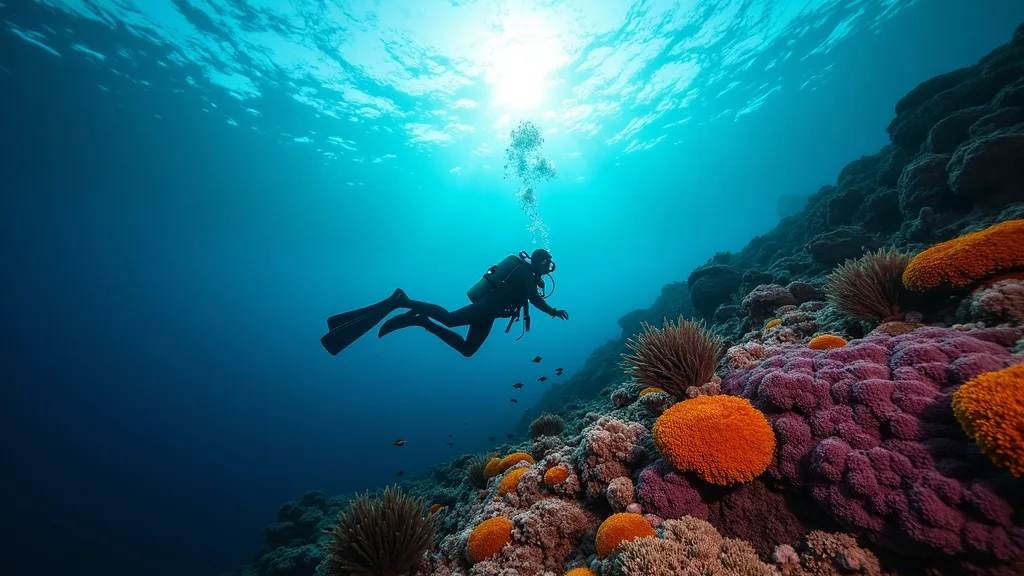
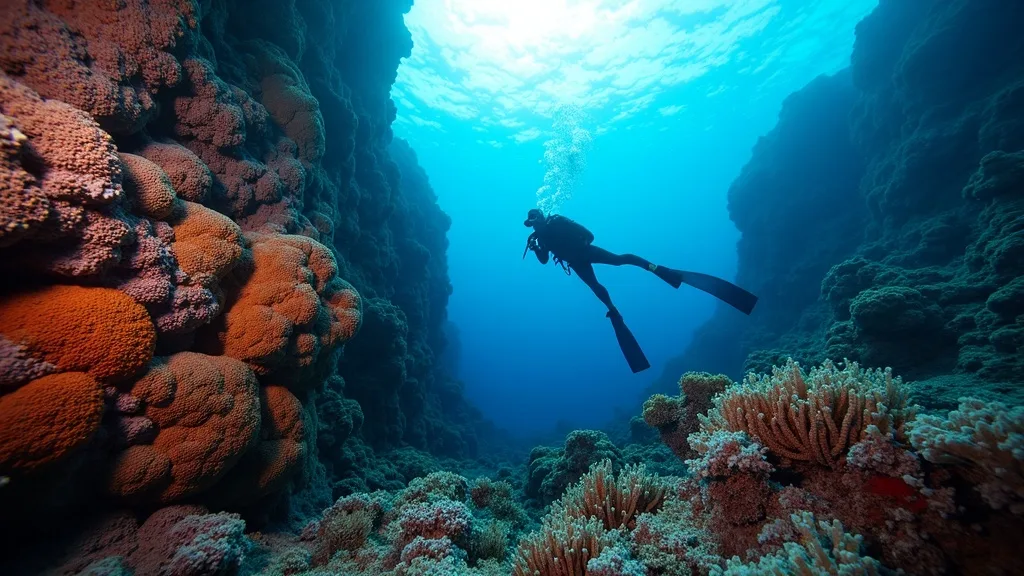
Raja Ampat’s headline sharks are not the ones people expect. Tasselled wobbegongs lie flat under table corals through the day, and epaulette sharks — the “walking sharks” — use their fins to crawl across shallow reef at night. Raja Ampat has banned shark fishing across its waters since 2013.
Which sharks will you actually see in Raja Ampat?
Not the big pelagics. Raja Ampat is not a hammerhead or thresher destination, and any operator implying otherwise is selling you the wrong region. What Raja Ampat has instead is a set of small, strange, reef-bound sharks that are genuinely difficult to see well anywhere else — plus healthy numbers of the ordinary reef species that most of Southeast Asia has fished out.
| Species | Size | Where and when | How hard to find |
|---|---|---|---|
| Tasselled wobbegong (Eucrossorhinus dasypogon) | Up to ~1.8 m | Under table corals, in crevices, day dives | Common with a guide who knows the corals |
| Epaulette / walking shark (Hemiscyllium spp.) | Usually under 1 m | Shallow reef flats and rubble, night dives | Reliable on a shallow night dive |
| Blacktip reef shark | Up to ~1.6 m | Shallow lagoons and reef edges, including the Wayag shallows | Common in the north |
| Whitetip reef shark | Up to ~1.6 m | Resting under ledges by day, hunting at night | Common |
| Grey reef shark | Up to ~1.9 m | Current-swept edges and channels | Occasional |
| Bamboo shark | Usually under 1 m | Rubble and reef flat at night | Occasional |
What makes a wobbegong worth travelling for?
They do not look like sharks. A tasselled wobbegong is a flattened, mottled carpet of an animal with a fringe of branched skin flaps around the head that break up its outline against the reef. It lies still under a table coral all day, mouth forward, waiting for a fish to come close enough. The camouflage is so effective that most divers swim over several before a guide points at one and the shape suddenly resolves.
They are also an ambush predator with a genuinely fast strike and rearward-angled teeth. Every recorded incident involving a wobbegong follows the same script: a diver touched it, cornered it, or put a knee or hand down without looking. The rule is simple and it is the same rule that protects the coral — look before you place anything, and never handle.
What is a walking shark, and how do you find one?
Epaulette sharks are small, cylindrical, boldly spotted sharks named for the large dark spot behind the pectoral fin. Their trick is locomotion: rather than swimming, they use their paired fins in an alternating gait to push themselves along the bottom and between tide pools. Some species in the genus tolerate remarkably low oxygen levels, which is what makes stranded reef-flat pools survivable for them.
Finding one is a night-dive proposition. The method is patience over shallow rubble and reef flat, torch beam low and wide, scanning for movement rather than for a shape. When you find one, keep the beam off its eyes, stay back and let it keep walking — a shark that is pinned by three torches stops behaving naturally and the encounter is over. The northern itineraries that spend time in the Wayag and Kawe shallows, like the north Raja Ampat and Wayag route, are particularly good for shallow night diving.
What did the 2013 shark sanctuary actually change?
Raja Ampat Regency declared a shark and ray sanctuary in 2013 across roughly 4.6 million hectares, banning shark fishing and the fin trade in its waters. Indonesia followed in February 2014 with a manta ray sanctuary covering its entire exclusive economic zone of roughly 6 million square kilometres.
The practical effect is what you see on a dive: reef shark numbers that would be unremarkable in the 1980s and are now unusual across most of Southeast Asia. Enforcement is the hard part, and it is funded in part by the conservation card every visitor buys — the mechanics are in the two Raja Ampat fees explained. In southern Raja Ampat, community ranger patrols in a large no-take reserve are the clearest working example; we cover that in where your fees actually go.
What is the etiquette on a night dive?
- Torch off the eyes. Light the animal from behind or to the side, and never hold a beam on it continuously.
- No handling, no repositioning. Moving a wobbegong for a photograph is both a bite risk and a straightforward welfare failure.
- No baiting. Nothing gets fed, ever.
- Buoyancy above everything. Night dives here are shallow and over living substrate. Kneeling on rubble to steady a camera is how coral gets broken.
How do you photograph a wobbegong without wrecking the reef?
The instinct is to get low and close, which usually means putting a hand or a knee on the coral the animal is hiding under. Do not. The workable technique is a wide lens, trim set so you can hover horizontally at arm’s length, one finger on bare dead rock at most, and a strobe angled to avoid backscatter off the fringe. Shoot the head-on portrait and accept that some angles are not available without damage.
Photographers who want dedicated time on subjects like this, rather than a schedule built around the group average, are better served by the photography-focused liveaboard itinerary. The same restraint principles apply to the manta cleaning stations covered in reef versus oceanic mantas.
Where are the blacktip nurseries?
The Wayag shallows in far northern Raja Ampat are the best-known place to see juvenile blacktip reef sharks in very shallow water, often visible from the tender or while standing on a sandbar. It is one of the few places where a non-diver gets a genuine shark encounter — worth knowing if part of your party is snorkelling, as covered in joining a liveaboard as a non-diver. The same karst landscape and the viewpoint hike are described in the topside guide to Wayag and Piaynemo.
Want a route weighted towards shallow night diving and the northern shallows? Message Komodo Luxury on WhatsApp at +62 811 3823 875 or email [email protected] with your travel window, certification level and party size. We reply with the vessels available on those dates, the cabin-by-cabin rate and a plain list of what is not in the price.
Frequently asked questions
What is a walking shark?
An epaulette shark – a small, slender bottom-dwelling shark that uses its paired fins to push itself across reef flats and through shallow pools rather than swimming. They are typically under a metre long, harmless to divers, and most reliably seen on shallow night dives. Raja Ampat is one of the best places in the world to see one behaving naturally.
Are wobbegongs dangerous to divers?
Not if you leave them alone. Tasselled wobbegongs are ambush predators that lie flat under table corals and in crevices, and they will not pursue a diver. The bites that do occur almost always follow someone touching, cornering or accidentally kneeling on one. The practical rule is to look before you place a hand, a knee or a camera housing.
Where in Raja Ampat can I see wobbegongs?
Across the archipelago, but they are especially associated with the Dampier Strait reefs, where guides know individual table corals that reliably hold one. They are found under overhangs, in crevices and flattened against the substrate. Look for the fringe of skin flaps along the edge of the head – it is usually the only part that gives them away.
Is Raja Ampat a shark sanctuary?
Yes. Raja Ampat Regency declared a shark and ray sanctuary in 2013, covering roughly 4.6 million hectares, banning shark fishing and the shark fin trade within its waters. Indonesia followed with a nationwide manta ray sanctuary across its entire exclusive economic zone in February 2014.
Do I need to do a night dive to see walking sharks?
Practically, yes. Epaulette sharks are nocturnal and shelter during daylight, so a shallow night dive over reef flat or rubble is the reliable way to see one moving. Most liveaboard itineraries offer an optional night dive on most evenings; check that yours does before booking if this is a priority.
This guide is published by the team behind this Raja Ampat eco liveaboard site — Komodo Luxury, part of Juara Holding Group, running dive and cruise operations in eastern Indonesia since 2015. Questions on a specific date or vessel: WhatsApp +62 811 3823 875, email [email protected].