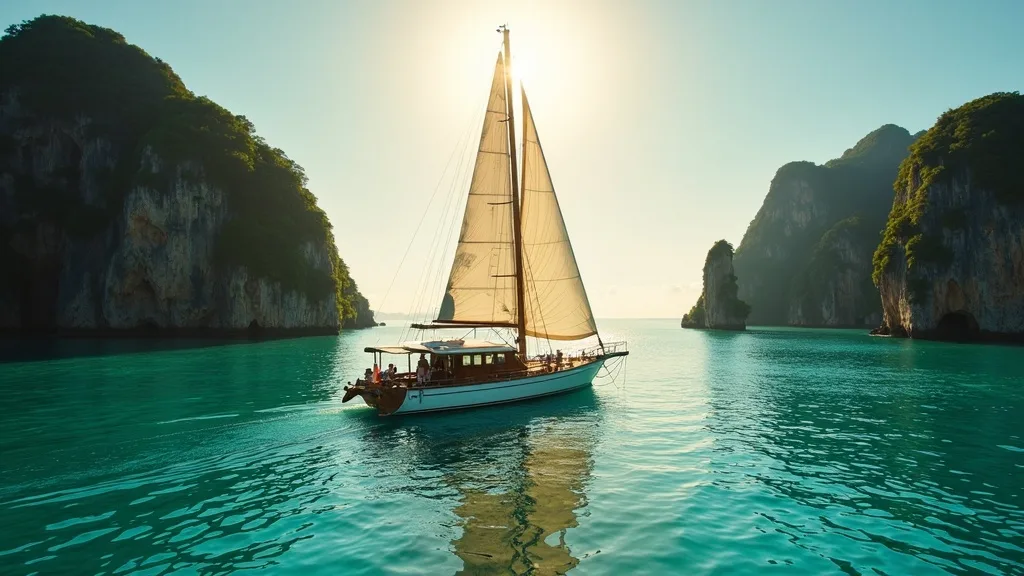
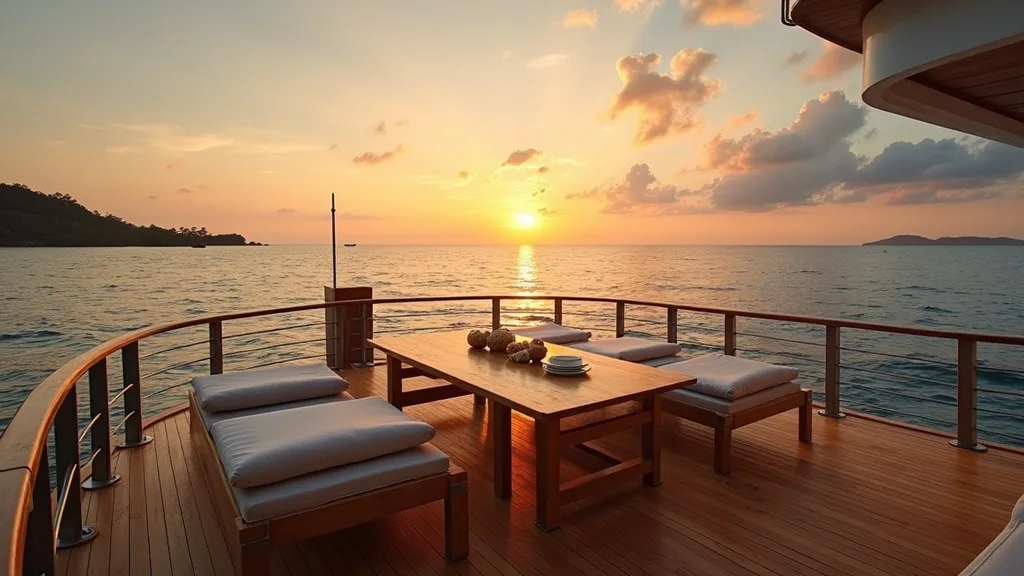
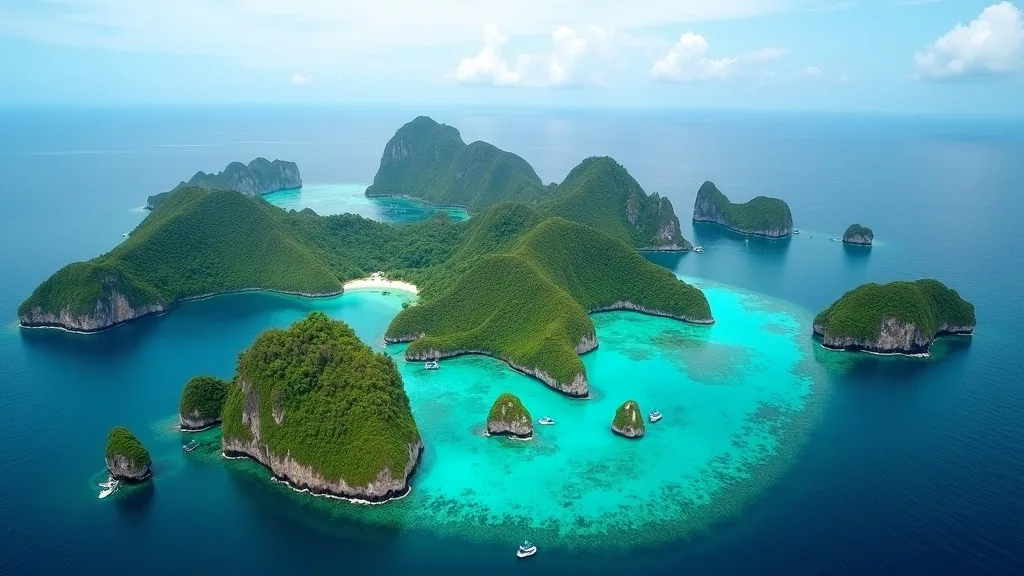
A phinisi is a two-masted Indonesian sailing vessel of Bugis and Konjo origin, still built by hand on the beaches of Tana Beru and Bira in South Sulawesi from dense tropical hardwoods — a craft UNESCO inscribed on its intangible cultural heritage list in 2017.
Where does the phinisi come from?
From the Bugis and Konjo seafaring communities of South Sulawesi, whose trading vessels moved goods across the Indonesian archipelago and well beyond it for centuries. The rig that gives the type its name — two masts carrying multiple headsails — is the visible signature; the deeper inheritance is the hull-building method.
That method is what UNESCO recognised in 2017, inscribing the art of boatbuilding in South Sulawesi on the Representative List of the Intangible Cultural Heritage of Humanity. The listing is not about the finished boats. It is about a body of knowledge held by working shipwrights and passed down by apprenticeship.
How is one actually built?
On the beach, in the open, without drawn plans. The keel is laid directly on sand at Tana Beru or Bira, and the hull is planked up from it using proportions carried in the master builder’s memory and adjusted by eye as the shape emerges. Planks are shaped to fit one another and fastened with wooden dowels as well as metal fixings, then caulked.
The timbers are dense tropical hardwoods — ironwood (ulin) and teak among them — chosen for rot resistance and structural life in warm salt water. A hull built this way and maintained properly lasts decades, and can be repaired in a working village anywhere along the trade routes it was designed for. Ceremony still accompanies the major stages, particularly keel-laying and launch.
How does a phinisi compare with a steel dive yacht?
| Traditional phinisi | Modern steel-hulled dive yacht | |
|---|---|---|
| Motion at sea | Slower, deeper roll; feels heavy and settled | Quicker, sharper motion; less roll at speed |
| Noise at anchor | Timber absorbs sound; generator is the variable | Hull transmits machinery noise more readily |
| Heat and humidity | Timber and open decks handle equatorial heat well | Depends heavily on insulation and air conditioning |
| Cabin layout | Shaped by the hull; cabins vary in size and position | More uniform, often more cabins per metre |
| Repairability in the region | Excellent — local yards and shipwrights | Limited; steel work often means a distant yard |
| Hull life | Decades with disciplined maintenance | Decades with disciplined corrosion control |
| Deck space per guest | Generally generous | Varies with design |
Neither is objectively better. The phinisi trades some interior uniformity for deck space, craft and a motion that many guests prefer — though not all, which is why cabin choice matters and why we go through it in the seasickness guide.
Is a wooden boat automatically more sustainable?
No. This is the claim we see made most often and defend least. The honest version has two parts.
What is genuinely true: a hull that lasts decades and can be repaired in a local yard with local materials has a very different whole-of-life footprint from one that requires distant industrial infrastructure. Building and maintaining these vessels also sustains a living craft economy in Bulukumba.
What is not automatically true: that the timber was responsibly sourced. Ironwood and teak come from forests under real pressure, and unless a specific vessel can show legal, traceable sourcing under Indonesia’s timber legality framework, “wooden, therefore eco” is an empty sentence. Ask any operator, including us, to answer that question about the actual boat you would be sailing on rather than about phinisi in general. It is one of the nine questions in how to judge an eco liveaboard.
What does it take to convert a phinisi into a real dive platform?
Considerably more than putting tanks on the aft deck. The specification that separates a working dive vessel from a cruise boat with cylinders:
- Dive deck. Individual numbered stations, secure tank racks, wide clear access to the water, a ladder that can be used in swell.
- Air and gas. Redundant compressors, sufficient cylinder inventory for three to four dives a day, and a nitrox membrane if enriched air is offered — see is nitrox worth it in Raja Ampat.
- Tenders. At least two, so a group of twelve is never left waiting on the surface in current.
- Camera facilities. A dedicated rinse tank kept separate from mask rinse, a dry bench and enough charging points, as discussed in power, Wi-Fi and camera care onboard.
- Water and waste. A reverse-osmosis watermaker instead of crates of bottled water; holding tanks; sorted waste carried back to shore.
- Safety. Oxygen, a stocked first-aid kit, satellite communications, life rafts and a written emergency plan — the remoteness argument is set out in dive insurance, oxygen and evacuation.
If you are chartering a whole vessel for a family or a dive club, these are the specifications to ask about line by line rather than accepting a brochure adjective. The private charter page explains what we send you before you commit, and the northern Wayag route shows the kind of remote itinerary that makes the equipment list matter.
Want the actual specification of the vessel on your dates? Message Komodo Luxury on WhatsApp at +62 811 3823 875 or email [email protected] with your travel window, certification level and party size. We reply with the vessels available on those dates, the cabin-by-cabin rate and a plain list of what is not in the price.
Frequently asked questions
What is a phinisi?
A phinisi is a traditional Indonesian sailing vessel of Bugis and Konjo origin, characteristically two-masted with multiple headsails, built by hand from dense tropical hardwood. The boatbuilding craft was inscribed on the UNESCO Representative List of the Intangible Cultural Heritage of Humanity in 2017.
Where are phinisi built?
Principally at Tana Beru and Bira in Bulukumba regency, South Sulawesi, where hulls are still laid out and planked on the open beach. Shipwrights work largely from inherited proportion and experience rather than from drawn plans, which is precisely why UNESCO recognised the practice.
Is a phinisi stable in open sea?
A well-built, well-loaded phinisi handles Indonesian archipelagic waters perfectly well – that is what the type was designed for over generations of inter-island trade. It is a displacement wooden hull, so it has a slower, deeper roll than a modern steel dive yacht. Some passengers find that motion easier, others find it harder.
Is a wooden boat more environmentally friendly?
Not automatically, and that claim is made far too casually. The genuine arguments are hull longevity and local repairability, which reduce whole-of-life impact. They only hold if the timber was legally and traceably sourced. Wood alone is not a sustainability credential, and no vessel should be marketed as though it were.
What makes a phinisi a proper dive boat?
A dedicated dive deck with individual tank stations, adequate compressors and ideally a nitrox membrane, at least two tenders so a group is never waiting on the water, a camera rinse and charging area, a reverse-osmosis watermaker, oxygen and first aid, and the navigation and safety equipment for remote operation. A converted charter yacht without those is a cruise boat with tanks on it.
This guide is published by the team behind this Raja Ampat eco liveaboard site — Komodo Luxury, part of Juara Holding Group, running dive and cruise operations in eastern Indonesia since 2015. Questions on a specific date or vessel: WhatsApp +62 811 3823 875, email [email protected].